The Artistic Utility of a Red Floral Watercolor Arrangement
The world of digital art and design thrives on versatile, foundational assets that serve as springboards for creativity. Among these, a Red Floral Watercolor Arrangement stands as a particularly powerful and evocative example. It is not merely an illustration of arrangement watercolor floral; it is a multipurpose design element imbued with emotion, style, and immense practical potential. This piece delves into the characteristics, real-world applications, and strategic considerations of utilizing such an asset, moving beyond its aesthetic appeal to explore its functional role in various creative and commercial ecosystems.
Core Characteristics of the Watercolor Floral Illustration
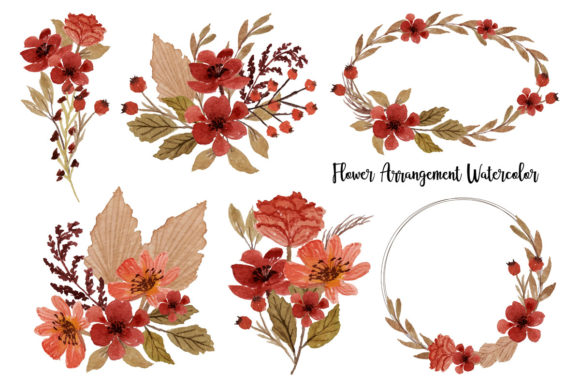
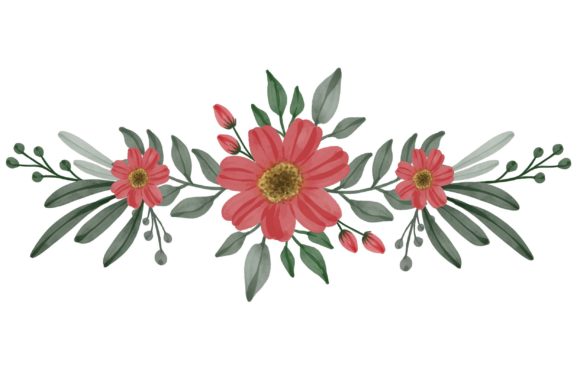
Understanding what defines this asset is key to leveraging its power. A high-quality Red Floral Watercolor Arrangement is typically characterized by its organic, hand-painted feel. The watercolor technique inherently brings soft blends, subtle gradients, and gentle transparency. The choice of red—a spectrum spanning crimson, scarlet, burgundy, or rose—conveys warmth, passion, elegance, or romance. The arrangement itself is a composed cluster of blooms and foliage, often featuring elements like roses, peonies, or abstract floral shapes, creating a balanced focal point. This illustration of arrangement watercolor floral avoids harsh digital precision, instead offering a touch of artistic imperfection that adds authenticity and charm.
The Technical Package: Formats and Their Purposes
What's Included: Illustration in .EPS 10 format, .JPG format, and .PNG format. This triad is crucial for utility. The .EPS file is a vector format, meaning it is scalable to any size without loss of quality. This is indispensable for projects requiring resizing, such as large-scale prints for wall decor or fabric patterns. The .JPG offers a compressed, high-resolution raster image suitable for digital backgrounds or mock-ups where full-color range is needed. The .PNG format, often with transparency, is the go-to choice for overlaying the design onto other elements, such as creating a wreath graphic for a website or placing florals on a mug or tee-shirt design without a white background. This multi-format inclusion ensures the asset is ready for virtually any technical requirement.
Primary Use Cases Across Creative Industries
The practical applications of this illustration are vast, crossing boundaries between personal projects and professional commerce.
- Wallpapers and Wall Art: The soft, expansive nature of a watercolor arrangement makes it ideal for creating serene digital wallpapers for devices or as the basis for physical prints, canvases, or framed art for home and office decor.
- Wreath Designs: The circular or clustered composition of many floral arrangements can be directly adapted or modified to form decorative wreath graphics. These are used for seasonal promotions, logo elements, or festive digital and print materials.
- Stationery and Invitations: The romantic and elegant tone of red florals is perfectly suited for wedding invitations, anniversary cards, event announcements, and high-end business stationery, providing a classic yet artistic touch.
- Surface and Product Design: This is where the scalable vector format shines. The pattern can be applied to fabric for clothing or home textiles, etched onto mugs, printed on tee-shirts, or used on packaging for beauty products or specialty goods, transforming a simple illustration into a tangible product.
Beyond Decoration: Strategic Branding and Communication
For business owners and marketing professionals, a Red Floral Watercolor Arrangement transcends decoration. It can become a visual anchor for brands associated with luxury, femininity, creativity, or natural products. Its use in website headers, social media banners, or promotional materials communicates a specific brand mood without explicit text. Educators and researchers might utilize such imagery in presentations or materials related to botany, art history, or design theory, using it as a visual case study of watercolor technique or floral composition. For hobbyists, it serves as a ready-made element for digital scrapbooking, custom gift creation, or learning graphic design software through practical manipulation of a quality asset.
Advantages and Practical Benefits
Choosing a pre-made, high-quality illustration like this offers several distinct advantages. First is time efficiency. Creating a custom watercolor arrangement of comparable quality requires significant artistic skill and time. This asset provides an immediate, professional-grade starting point. Second is cost-effectiveness, especially for small businesses or individuals who cannot commission original art for every project. Third is consistency. Using the same core asset across multiple products—like a mug, card, and website banner—creates a cohesive visual identity. Finally, its adaptability is paramount. With the provided formats, a single purchase can yield outcomes for both digital and physical mediums, maximizing return on investment.
Critical Considerations for Implementation
To use this asset effectively, certain considerations must be noted. Always check the license terms associated with the illustration to ensure your intended use is permitted, especially for commercial products. When scaling for large prints like wallpapers, use the vector EPS file to guarantee sharpness. For digital use like web graphics, consider optimizing the JPG or PNG file size for faster loading. Color matching can be important; the red tones in the watercolor might need slight adjustment to align perfectly with a brand's specific palette or physical print process. Furthermore, while the arrangement is beautiful standalone, its integration with other design elements—typography, layout, additional graphics—requires thoughtful composition to ensure it enhances rather than overwhelms the final product.
Observing Trends and Enduring Appeal
The popularity of watercolor florals, particularly red arrangements, reflects broader trends in design. There is a sustained move towards aesthetics that feel human-made, organic, and warm, counterbalancing the sleekness of ultra-modern digital design. This illustration style taps into the desire for authenticity and tactile beauty in a digital world. It blends traditional art technique with contemporary digital utility. Its use in consumer products, from fabric to mugs, indicates a market that values art-infused everyday objects. As a design choice, it is both trendy and timeless; floral motifs are perennial, and the watercolor execution ensures it remains fresh and artistic rather than generic or clip-art-like.
The real-world relevance of a Red Floral Watercolor Arrangement lies in this duality: it is a piece of art and a functional tool. For the creator, it is a raw material. For the consumer, it is the final product's soul. For the educator, it is a teaching example. Its value is not locked within the frame of the illustration itself but is released through its application across contexts. By understanding its characteristics, leveraging its multiple formats, and thoughtfully integrating it into projects, one transforms a simple illustration of arrangement watercolor floral into a versatile instrument for communication, decoration, and commerce, proving that in the digital age, artistic elements are not just for viewing but for building upon.