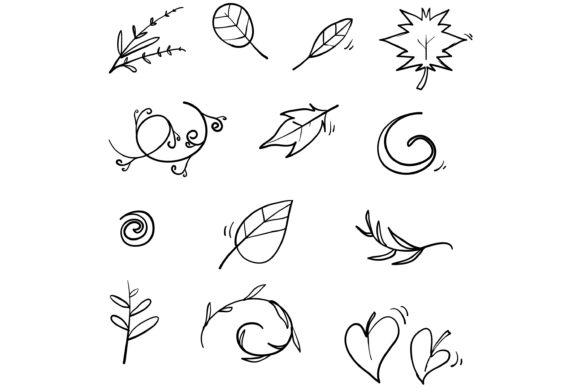
The Unbounded Charm of Doodle Floral Elements in Modern Design
The visual landscape, from digital interfaces to printed stationery, is increasingly embracing a softer, more personal aesthetic. Among the most versatile and evocative tools in this shift are hand drawn floral elements. These are not the precise, scientific renderings of vintage leaves botanical illustrations, but their playful, free-spirited cousins. Doodle floral elements, often conceived as doodle style vector isolated on white, bring an organic, accessible warmth to compositions that rigid graphics cannot. Their appeal lies in their imperfection, their suggestion of human touch in a world of automated precision.
From Sketch to Screen: The Anatomy of a Doodle Flower
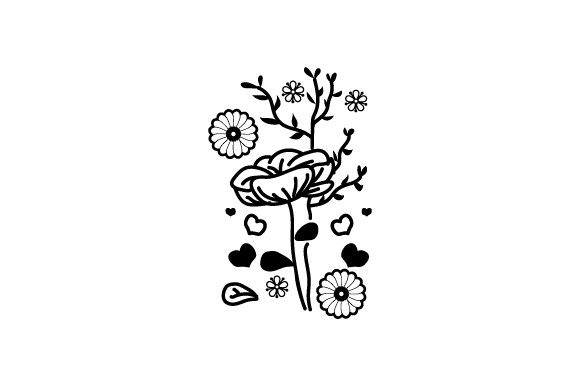
What exactly defines this style? A doodle floral element typically starts with a loose, continuous line. It might capture a simplified rose, a whimsical daisy, or a cluster of abstract petals. The lines are often uneven, with intentional wobbles or playful exaggerations. Unlike their vintage botanical counterparts, which serve a documentary purpose, doodles prioritize expression over accuracy. Coloring, when applied, is frequently non-photorealistic—soft washes of color, subtle gradients, or even monochromatic outlines. This approach makes them ideal for conversion to scalable vectors, ensuring they retain their charm at any size without losing detail.
Key Characteristics That Set Them Apart
Several core attributes make these elements distinct. First is their inherent informality. They feel sketched, not engineered. Second is versatility. A single doodle flower can adapt to contexts from a child’s birthday invitation to a boutique coffee shop’s branding. Third is emotional resonance. They evoke feelings of creativity, nostalgia, and lightness, bridging a gap between the artist and the viewer. Finally, their compositional flexibility is paramount. Being often isolated on white or a simple background, they can be layered, grouped, or scattered without overwhelming the primary content.
Practical Applications Across Industries
The use cases for doodle floral elements are as varied as the audiences they engage. For professionals in marketing and branding, these graphics offer a way to humanize a corporate message. A tech company, for instance, might use them in a campaign to suggest growth, innovation, and organic connectivity. Educators and researchers find them valuable in creating engaging materials, where complex data is softened by decorative borders or illustrative icons that break up dense text.
For creators and hobbyists, they are a foundational resource. A graphic designer might incorporate a suite of hand drawn floral elements into a wedding website template. A stationery maker could use them as the basis for a line of greeting cards. Small business owners, particularly in niches like crafts, wellness, or organic products, use them to establish a brand identity that feels authentic and hand-crafted. Even in digital UI design, subtle floral doodles can enhance user experience by adding visual landmarks and a friendly tone to apps and websites.
Integration into Contemporary Workflows
How are these elements typically brought into a project? Many designers begin with a physical sketch, capturing the spontaneity of the doodle directly on paper. This sketch is then digitized, cleaned, and vectorized. The resulting doodle style vector becomes a reusable asset. In digital workflows, these vectors are placed into layouts where they interact with other components. They might frame text, act as bullet points in a list, or form a repeating pattern in a background. The key in implementation is balance; their strength is in enhancement, not domination. They should complement, not clutter.
Advantages Over More Formal Botanical Art
Comparing doodle florals to detailed vintage leaves botanical illustrations reveals a strategic choice. The vintage illustrations carry a weight of tradition, authority, and specific knowledge. They are superb for projects requiring a sense of history, scientific accuracy, or refined elegance. Doodle elements, conversely, offer approachability and adaptability. They are quicker to create and modify, they feel more contemporary to a broad audience, and they seamlessly blend with modern typography and layout trends. Their advantage is in conveying concept and mood rather than specific botanical detail.
Another significant benefit is their scalability in production. A set of isolated vectors can be easily adjusted for color to match brand guidelines, or resized for different media from a social media post to a large poster. This makes them a cost-effective and efficient resource for projects with multiple deliverables.
Critical Considerations for Effective Use
While their charm is potent, using doodle floral elements effectively requires thoughtful consideration. One must assess the overall tone of the project. Are these playful graphics appropriate for a serious financial report? Probably not. However, for a report on sustainability or community gardens, they might be perfect. Consistency in style is also vital. Mixing overly detailed vintage botanicals with loose doodles can create visual discord unless intentionally designed for contrast.
Another consideration is cultural context. Florals carry symbolic meanings; a doodle lily might evoke different feelings than a doodle sunflower. Understanding these subtle associations can enhance the communicative power of the elements. Furthermore, in terms of accessibility, ensuring that decorative florals do not interfere with text readability or navigation in digital spaces is a fundamental responsibility for the designer.
Observing Current Trends and Evolution
The application of these elements is not static. Current trends show a move towards hybridization. Designers are blending the line work of doodles with the color palettes or specific shapes found in vintage botanical archives. There’s also a rise in animated doodle florals in digital media, where a simple flower might gently bloom or rotate on a webpage, adding a layer of engagement. Another observation is the growing preference for custom-drawn sets over generic stock libraries, as brands seek unique visual languages that feel authentic to their story.
The source of inspiration often cycles back to nature itself, but filtered through a personal, stylized lens. A designer might observe the structure of an actual vine but translate it into a repeating, simplified doodle pattern for a textile design. This connection to the real world, processed through human creativity, is what keeps the style fresh and relevant.
Crafting Your Own Doodle Floral Vocabulary
For those interested in creating or utilizing these elements, the process begins with observation and practice. Start by looking at both natural forms and existing vintage botanical illustrations to understand basic structures. Then, deliberately loosen your approach. Practice drawing flowers without lifting your pen, embracing the unexpected turns in the line. Focus on creating a library of simple shapes: a leaf, a berry, a petal. Digitize these and experiment with arranging them into larger compositions.
When building a project, think of these doodles as a visual language. A single small flower might denote a gentle emphasis. A scattered bouquet could indicate celebration or abundance. A winding vine might guide the viewer’s eye through a layout. By assigning loose semantic meaning to your elements, you use them not just as decoration, but as integral parts of the communication.
The enduring relevance of hand drawn floral elements, particularly in their doodle form, speaks to a universal desire for designs that feel alive and human. They bridge the gap between the digital perfection of our tools and the organic irregularity of the natural world. In a composition, a well-placed doodle flower is not merely a graphic; it is an invitation, a moment of softness, a breath of creative spirit made visible.