The Art and Science of Designing Yellow Floral Bouquets
In the world of event design and personal expression, floral arrangements hold a timeless significance. Among these, yellow floral designs evoke a unique spectrum of emotions—from the bright joy of sunflowers to the delicate warmth of buttercream roses. This exploration delves into the creative process behind yellow floral arrangement bouquet design, particularly examining its intersection with digital artistry, such as watercolor yellow florals arrangement design for wedding invitations. Understanding this from both a physical and digital perspective reveals a fascinating synergy between nature, art, and technology.
Characteristics of Yellow Floral Composition
Designing with yellow flowers is not merely about selecting blooms of a certain hue. It involves a deep consideration of texture, form, seasonality, and symbolic meaning. A yellow floral arrangement bouquet design might incorporate a dominant flower, like the bold chrysanthemum, as a focal point, surrounded by softer accents like ranunculus or tulips. The variation in yellow itself is critical; a palette can shift from pale lemon and cream to deep gold and ochre, creating depth and visual interest. This chromatic range allows the design to suit various contexts—a vibrant, summery bouquet for a cheerful event or a muted, watercolor-inspired arrangement for a soft, romantic wedding theme.
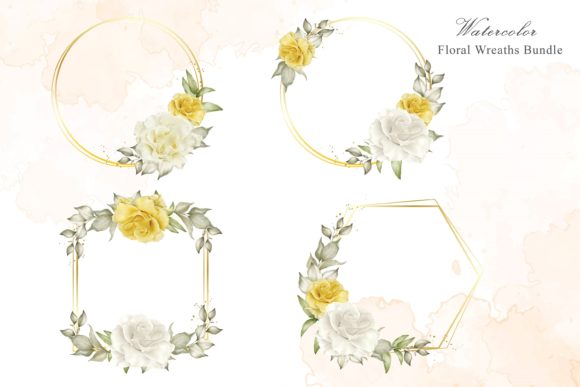
The structure of the bouquet is another fundamental characteristic. Designers often work with principles of balance, whether symmetrical or asymmetrical, and consider the weight and flow of the stems. A hand-tied bouquet feels organic and loose, while a more structured, geometric arrangement conveys modernity and precision. These physical design choices directly influence how the arrangement is later interpreted in digital formats, such as the illustrative templates used for invitations.
From Physical Bouquet to Digital Asset
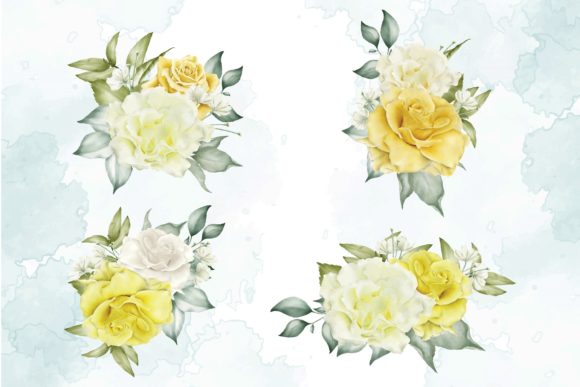
The transition from a tangible yellow floral arrangement to a digital design element is a key workflow for many creators. A photographer or illustrator captures the essence of the bouquet—its loose petals, the gradient of colors, the interplay of light and shadow. This captured imagery then becomes the raw material for graphic design. In the case of watercolor yellow florals arrangement design for wedding invitations, the artist often aims to replicate the soft, blended edges and translucent layers characteristic of watercolor painting. This style evokes a sense of artistry and tenderness, perfectly complementing the theme of a wedding.
This process highlights a practical consideration for professionals: the need for high-quality, editable source files. When a designer receives a request to create a wedding suite based on a specific yellow floral arrangement bouquet design, they require assets that are flexible. This is where the technical features of digital templates become crucial.
The Role of Editable Digital Templates
For graphic designers, stationery studios, and even couples undertaking DIY project creation, editable templates are invaluable tools. A template based on a watercolor yellow florals arrangement design typically includes several key features, as noted in many professional offerings. The promise of being easy to use is paramount; it means the layout is intuitive, layers are logically organized, and placeholder text is clearly defined.
The ability to customize text color is not a minor feature. It allows the design to maintain harmony. For instance, the text color might be changed to a deep brown or a soft gray to complement the yellow florals, ensuring the invitation is cohesive and readable. The use of only free fonts is a significant advantage for broad usability, removing licensing barriers and making the template accessible to a wider audience, including hobbyists and small business owners.
Another critical technical aspect is the printable template with a bleed area. This is essential knowledge for anyone producing physical invitations. The bleed area is extra image background that extends beyond the final trim edge of the printed piece. It ensures that when the paper is cut, the design or color runs all the way to the edge without unwanted white borders. For a watercolor design where colors fade softly, proper bleed setup prevents awkward, hard-cut lines at the edges.
File Formats and Software Considerations
The included files—Adobe Illustrator (AI), EPS, and JPG—serve distinct purposes for different users. The Adobe Illustrator AI file is the primary, layered source file, intended for use in Adobe Illustrator 2018 or later. This format allows complete manipulation of every element: moving a flower, altering a color gradient, or adjusting the transparency of a watercolor wash. The EPS file is a versatile vector format that can be opened by many other vector graphics programs, offering a fallback option. The JPG provides a quick, high-resolution preview or a file suitable for certain digital uses where editing is not required.
This multi-format approach accommodates the varied technical proficiencies and software access of the audience. A professional designer with full Adobe Creative Suite will leverage the AI file for deep customization. A hobbyist using a different software might start with the EPS. An educator teaching graphic design might use the JPG as a reference image for students to study color theory and composition before attempting to recreate it.
Real-World Applications and Use Cases
The application of these designs extends far beyond the wedding invitation itself. A cohesive yellow floral and watercolor theme can permeate an entire event's branding. Once the core watercolor yellow florals arrangement design is established in the invitation, it can be adapted for save-the-date cards, ceremony programs, menu cards, table numbers, and thank-you notes. This creates a unified visual language for the wedding, reinforcing the chosen aesthetic and emotional tone.
For business owners, such as owners of boutique floral shops or event planning services, these digital assets become part of their service offering. They can provide clients not only with the physical yellow floral arrangement bouquet design for the event but also with matching digital stationery, creating a premium, full-service experience. Similarly, content creators and educators might use these designs in tutorials, blog posts, or online courses about floral design, graphic design, or wedding planning, demonstrating the practical link between different creative disciplines.
Researchers and cultural observers might note the trend of yellow in event design. Yellow, historically associated with friendship, happiness, and optimism, has seen a resurgence in popularity, moving beyond traditional pastel palettes. Its use in watercolor style aligns with a broader trend towards organic, painterly textures in design, a reaction to the overly digital and crisp aesthetics of previous years.
Practical Advantages for the End User
From a user's perspective, whether a professional integrating the template into a client project or a consumer personalizing their own wedding items, the advantages are concrete. The time savings are immense. Starting with a professionally composed watercolor yellow florals arrangement design eliminates the need to create the foundational artwork from scratch. The focus shifts to customization—adding names, dates, and venue information—which is the meaningful, personal part of the process.
Consistency is another major benefit. The color palette, floral style, and artistic technique are already harmonized within the template. This guarantees that all printed materials will look like part of a set, which is often a challenge when sourcing different elements from various vendors or attempting DIY projects without strong design skills. Furthermore, the use of free fonts ensures that the user will not encounter unexpected compatibility or licensing issues when sending files to a printer or sharing drafts with family.
Essential Considerations and Implementation Steps
While the features and advantages are clear, successful implementation requires attention to several considerations. First is software compatibility. Ensuring that one's version of Adobe Illustrator or other vector software is compatible with the template version (e.g., 2018 or later) is a basic but vital step. Without this, the file may not open correctly, or features may not work as intended.
Second is understanding print specifications. When using the printable template with bleed area, the user must collaborate with their printer or understand their home printer's capabilities. They need to know the exact final trim size and ensure their software setup matches the printer's requirements. Misunderstanding bleed and margins is a common source of printing errors.
A third consideration is artistic judgment. Even with a beautiful base design, customization choices matter. Selecting a text color that clashes with the yellow palette or using a font style (even if free) that contradicts the watercolor's softness can undermine the design's impact. It’s advisable to study the original composition—notice where the light and dark areas are in the watercolor yellow florals arrangement design—and choose text colors and placements that complement those areas.
The workflow for implementation typically follows a logical path: open the source AI file in Illustrator, review the layer structure to understand how the design is built, edit the text layers to insert custom information, experiment with text color changes using the document's color swatches or guides, and finally, export the appropriate file (usually a PDF with bleeds included) for printing or a JPG for digital sharing. For those using the template as a learning tool, the workflow might involve deconstructing the layers to study how the watercolor effect was digitally simulated, providing invaluable insight into advanced Illustrator techniques.
Observations on Trends and Future Directions
The popularity of yellow floral arrangement bouquet design, paired with its watercolor interpretation, speaks to a desire for warmth and organic artistry in formal events. This trend likely responds to a cultural moment seeking optimism and natural beauty. Technologically, the demand for easy-to-use, editable, and printable templates reflects the growth of the creator economy, where professionals and amateurs alike seek high-quality tools to execute their visions efficiently.
Future developments may see even closer integration between the physical and digital. Perhaps florists will offer not just the bouquet but an instant digital asset pack derived from photographs of that specific bouquet. Or template designs might become more dynamic, allowing not just color changes but modular swaps of different floral elements within the arrangement. The core principle, however, remains: the design starts with an understanding of the real, physical beauty of a yellow floral arrangement, and the digital tools exist to faithfully and flexibly extend that beauty into the myriad touchpoints of our personal and professional lives.