Integrating Fine Line Floral and Rainbow Watercolor Clipart into Your Creative Workflow
For professionals, entrepreneurs, and hobbyists seeking to elevate their visual projects, clipart collections represent not just a set of images, but a foundational asset. The Fine Line Floral, Rainbow Watercolor clipart pack is designed specifically for this role. It serves as a high-quality, versatile component within a broader creative or business process, moving from idea generation to final product execution.
Understanding the Asset: Core Characteristics and Strategic Fit
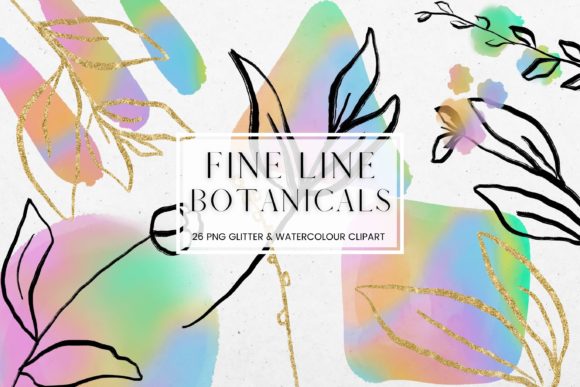
This collection consists of 26 distinct pieces blending precise fine line botanical illustrations with soft, vibrant watercolor washes. The technical specifications—high-resolution files averaging between 2041 × 2300px and 2405 × 2370px—are not merely details; they are determinants of how the asset integrates into your workflow. High resolution ensures the clipart remains crisp when scaled for large formats like t-shirt designs or reduced for smaller items like business cards, maintaining quality control across diverse outputs.
Its compatibility with major platforms like Photoshop and Canva, including mobile versions, means it fits seamlessly into both desktop-centric professional environments and on-the-go, agile creation processes. This flexibility allows you to incorporate the elements during initial concept sketching in Canva or during final refinement stages in a more advanced editing suite like Photoshop, without format conversion hurdles.
Phase One: Project Initiation and Conceptual Planning
The utility of Fine Line Floral, Rainbow Watercolor begins at the planning stage. When drafting a mood board for a wedding invitation suite, branding a new wellness business, or outlining a digital marketing campaign, these elements can serve as concrete visual anchors. Instead of working with vague stylistic ideas, you can place actual clipart onto your draft layouts. This practice helps establish color harmony, assess the balance between delicate line work and bold watercolor, and make early decisions about composition.
This early integration aids in efficiency and consistency. By selecting a subset of the 26 floral and watercolor pieces as your project’s core visual lexicon, you guarantee that all subsequent materials—from the initial Instagram post graphic to the final product packaging sticker—share a coherent aesthetic. This is crucial for brand-building projects where visual consistency directly impacts recognition and trust.
Workflow Integration and Tool Interaction
In a typical workflow, these clipart files act as a layer between raw inspiration and final design software. A common process might involve:
- Download and Organization: Immediately sorting the files into a dedicated project folder or a cloud storage system like Google Drive or Dropbox. Proper digital asset management from the start prevents time loss searching for files later.
- Platform Import: Uploading the selection into your chosen design platform. In Canva, you would add them to "Your Uploads"; in Photoshop, place them into a library or open them as smart objects. This step solidifies their role as ready-to-use components.
- Iterative Combination: Using the clipart in conjunction with other tools. For example, overlaying a fine line floral element onto a photographed product background in Photoshop, or combining a rainbow watercolor splash with typography templates in Canva to create a cohesive invitation. The clipart interacts with your text, photographs, layout grids, and color palettes.
Phase Two: Execution Across Diverse Use Cases
The mentioned applications—invitations, stickers, business cards, t-shirt designs, and more—are not just suggestions; they are direct pathways to implementation. Each use case represents a different point in a project timeline and requires slightly different preparation.
For print-centric projects like business cards or physical invitations, the high resolution is critical for professional printing results. Here, you would integrate the clipart during the layout phase, after content is finalized but before sending files to the printer. Ensure the design software is set to the correct print dimensions and CMYK color mode if needed, though the clipart's RGB vibrancy is often preserved beautifully in modern digital printing.
For digital and merchandise projects like social media graphics or t-shirt designs, the process is more agile. You might use the clipart repeatedly across a series of social media posts, creating a recognizable theme. For t-shirts, the large file size allows you to scale a single dramatic floral piece to cover most of a shirt template without pixelation. In these workflows, the clipart often becomes the dominant visual, with text and other elements added supportively.
Practical Implementation Tips for Sustained Use
To maximize the long-term value of this asset, consider these operational tips:
- Create Derivatives: Don't use each file only in its original state. Use editing tools to modify colors subtly, create monochrome versions from the line work, or isolate the watercolor splash from the floral outline for different effects. This extends the utility of the 26 base files exponentially.
- Build Template Libraries: If you design invitations or business cards regularly, save your completed designs that incorporate the Fine Line Floral, Rainbow Watercolor clipart as templates. Next time a similar project arises, you can start from a partially completed, quality-assured base rather than from scratch.
- Maintain Quality Consistency: When using clipart across multiple projects for a single client or brand, establish a simple style guide noting which specific floral motifs and color combinations from the pack are "approved." This prevents aesthetic drift over time.
Phase Three: Finalization and Asset Management
As projects conclude, the role of the clipart shifts from active component to archived resource. Well-organized creators will not just save the final output but also note which clipart files were used and how they were modified. This creates a reference for future projects, allowing you to quickly replicate a successful look or avoid repeating an unsuccessful combination.
Furthermore, the cross-platform compatibility ensures that these assets remain useful even if you change your primary design tool. Moving from Canva to Adobe Express or from Photoshop to Affinity Designer, the high-resolution PNG or JPEG files will still function. This future-proofing is an often-overlooked aspect of workflow integration that protects your investment in time and creative energy.
Conclusion: A Process-Oriented Creative Resource
Ultimately, the Fine Line Floral, Rainbow Watercolor clipart collection is more than a set of pretty images. It is a designed-for-purpose resource that inserts itself at key points in a creative or business workflow: during planning for direction, during execution for quality and efficiency, and during archiving for long-term utility. By understanding its characteristics—the high resolution, the botanical-meets-watercolor style, the platform compatibility—you can strategically deploy it to enhance invitations, branding materials, merchandise, and digital content. Its value is realized not when downloaded, but when it is thoughtfully integrated into your process, becoming a consistent, reliable tool that elevates output while streamlining the path from concept to completion.